
Thermoforming film guide
How to Select Flexible Thermoforming Bottom Film for MAP Food Packs
A practical guide for selecting PA/PE and PA/EVOH/PE bottom films around product, cavity, lidding film, machine conditions, and shelf-life target.
Thickness matters, but it should not be the first and last selection criterion.
It is often the first number discussed: 80 micron, 120 micron, 180 micron. The working pack, however, depends on more than that number. The film has to unwind cleanly, heat evenly, form into the cavity, hold the packed product, seal to the top web, and support the intended shelf-life plan.
If the film is not matched to the product and line, problems show up quickly. Corners become weak after forming. Seals become inconsistent. The pack looks cloudy. The cavity does not hold shape. Or the structure is technically good on paper, but not suitable for the actual machine setting.
Start with the product
The product tells you what the film has to survive.
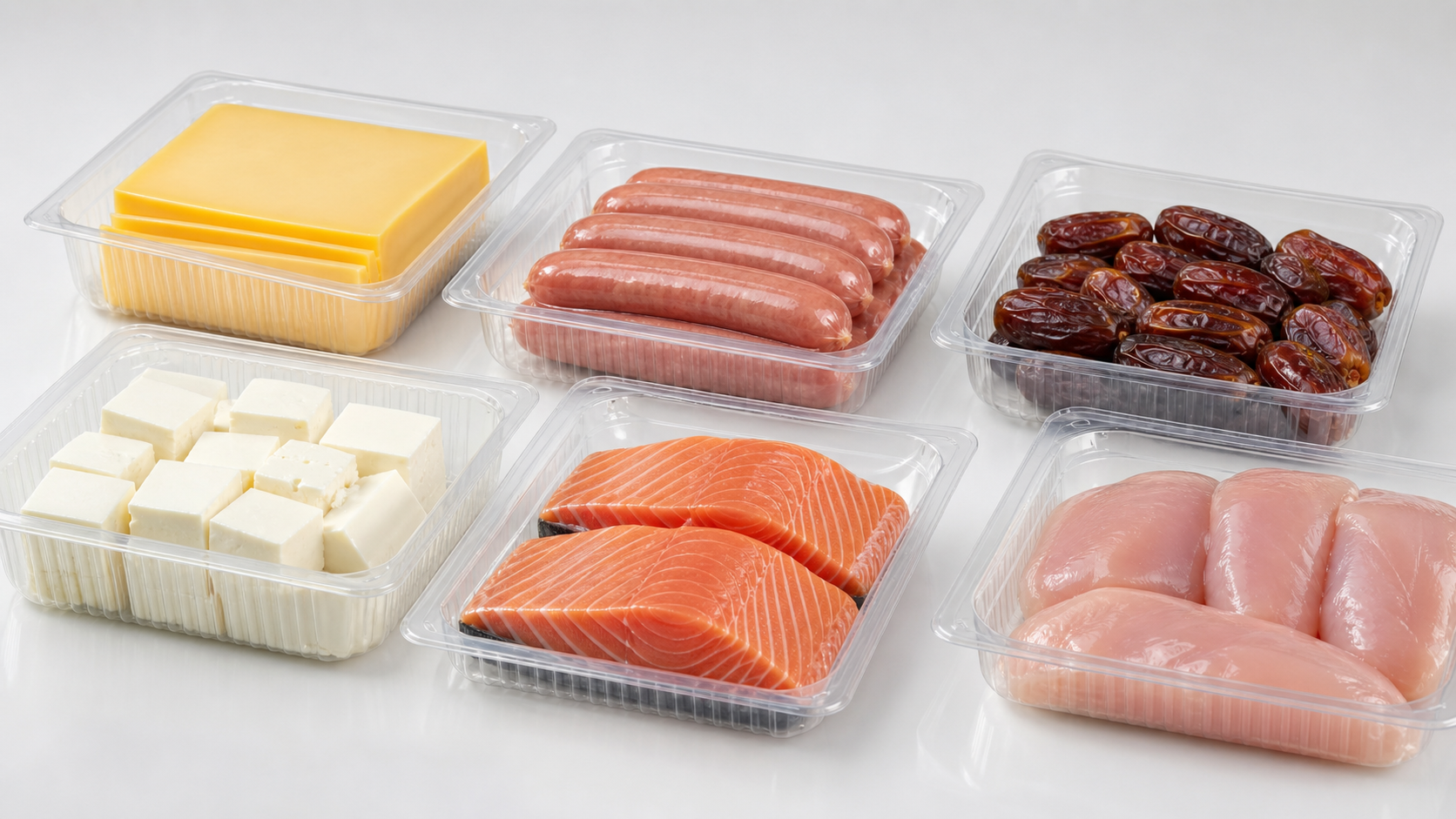
A paneer block, cheese block, meat portion, seafood pack, sausage pack, and dates tray will not behave the same way inside a thermoformed cavity. Some products are soft. Some have edges. Some release moisture. Some need stronger oxygen protection.
- Product type and filled weight
- Pack dimensions and cavity depth
- Product edges or puncture risk
- Chilled, frozen, ambient, or export storage
- MAP or vacuum need
- Target shelf life
Check forming depth and corner strength
In thermoforming, the bottom web is heated and drawn into the cavity. During this step, the film stretches. The weakest points are often the corners and deep-draw areas.
A film that looks strong as a flat sheet may become too thin after forming. This is why forming depth matters. A shallow cheese pack may not need the same film structure as a deeper meat or seafood pack.
Match the seal layer to the lidding film
A good bottom web also has to seal properly to the top web.
A buyer may ask for a PA/PE film, but the final pack depends on the full sealing system. The bottom film, lidding film, sealing temperature, dwell time, seal profile, contamination risk, and machine condition all matter.
- Top-web structure
- Peel seal or weld seal expectation
- Seal-area width and temperature window
- Product contamination near the seal area
- Leak-test and MAP gas retention need
Choose standard barrier or high barrier
For flexible coextruded thermoforming films, Nexus lists two practical structure directions.
PA/PE is the standard barrier structure when formability, toughness, clarity, and sealing are the main priorities.
PA/EVOH/PE becomes relevant when oxygen sensitivity is central to the shelf-life plan. For MAP packs, export movement, or products where oxygen exposure affects quality, the high-barrier structure must match the product, gas mix, lidding film, and shelf-life target.
Do not ignore pack presentation
Food packaging has to protect the product, but it also has to show it properly. Clarity matters for cheese, paneer, seafood, meats, dates, and premium food packs. A technically strong pack still has to look acceptable at the point of sale.
What to share before asking for a quote
- Product and filled weight
- Pack dimensions and cavity depth
- Bottom-web width
- Existing film structure and thickness, if available
- Machine make or format
- Lidding film structure
- MAP or vacuum need
- Storage condition and shelf-life target
- Current issue, if any
Final thought
A useful bottom-film recommendation starts with the finished pack: product, cavity, lidding film, machine settings, storage condition, and shelf-life target.
Nexus Corporation supplies 5 and 7 layer PA/PE and PA/EVOH/PE flexible thermoforming bottom films in 50 to 250 microns. Share your product, pack format, forming depth, lidding film, and shelf-life target for the right film structure.
Send the product, cavity, lidding film, machine format, and shelf-life target.
Request film input