Pack substrate
Tray material, bottom-web sealant, flange design, and contamination risk set the seal-layer choice.
 Get Quote
Lidding films and top web
Nexus supplies lidding films for tray sealing and thermoforming packs where seal reliability, peel behavior, barrier performance, anti-fog clarity, and print quality must work together on the packing line.
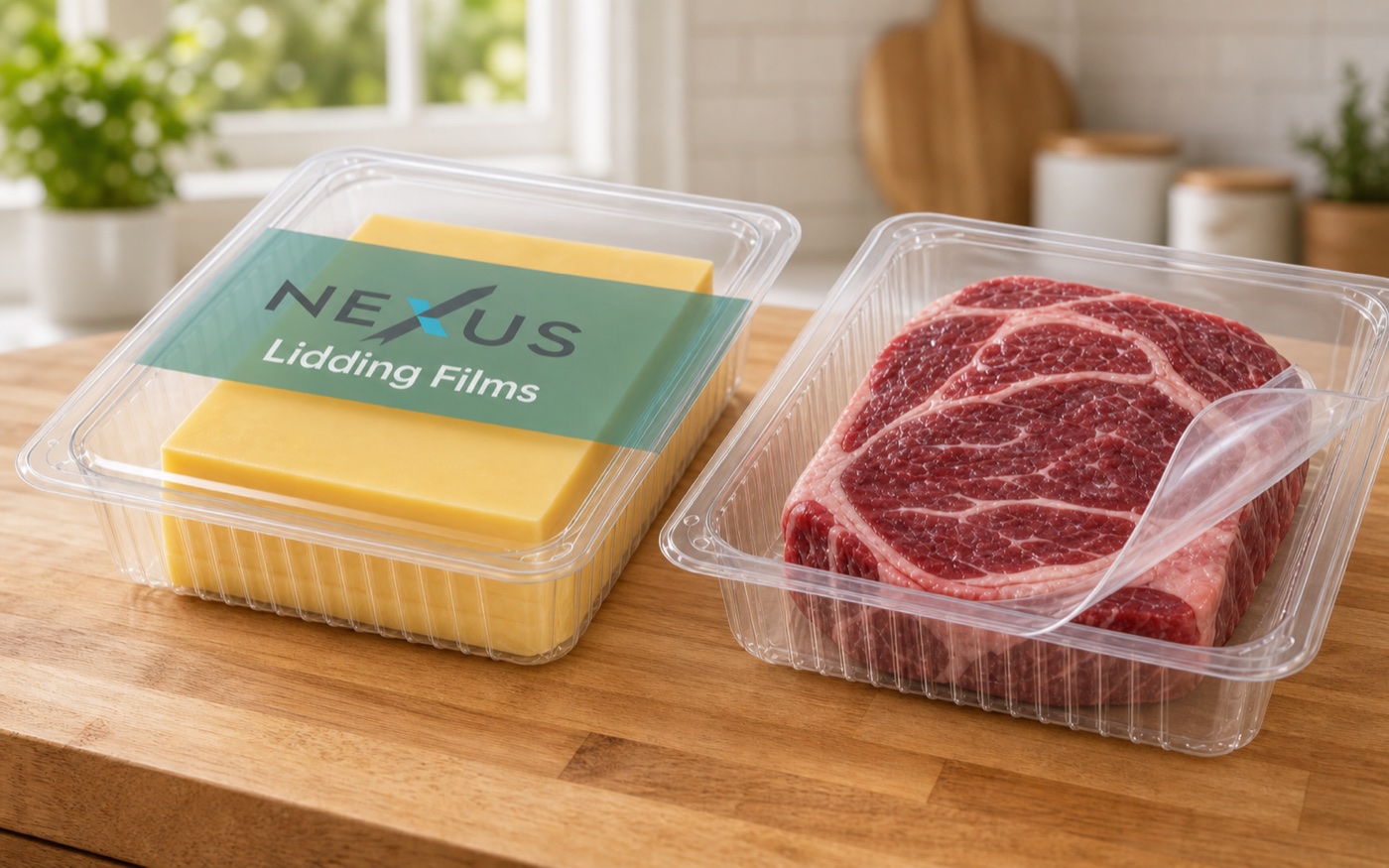
Selection logic
The correct top web depends on the tray or bottom film, sealant layer, pack format, MAP need, opening style, storage temperature, and whether the lid needs to be plain, printed, peelable, foil-based, or high barrier.
Tray material, bottom-web sealant, flange design, and contamination risk set the seal-layer choice.
Lock seal, easy peel, and stronger peel formats are chosen around the expected opening experience.
Oxygen, aroma, moisture, light exposure, and MAP gas retention decide the required barrier level.
Plain, printed, foil-based, or registered top webs need early planning around reel format and artwork.
Types of lidding film
These are the main lidding film families to compare first. Final structure depends against the tray or bottom web, sealing surface, product sensitivity, gas mix, storage condition, print need, and reel format.
Used when the pack needs a firm seal and a low risk of accidental opening during handling, storage, or distribution.
Used for retail packs where the lid should release cleanly from the seal area without tearing the tray, bottom web, or lid.
Used for dairy cups, ready-to-eat formats, and products where light protection, aroma retention, puncture resistance, or heat treatment make foil relevant.
Suitable when the lidding film carries brand graphics, product information, or shelf communication instead of relying on a separate label.
Used when oxygen, aroma, moisture, or MAP gas retention is central to the commercial shelf-life target.
Performance priorities
Once the lidding type is chosen, production trials should confirm the seal window, opening behavior, pack visibility, and barrier performance under real line and storage conditions.
Technical remarks
Lidding film behavior can change with tray material, bottom-web sealant, seal temperature, contamination in the flange, pack geometry, gas mix, and storage temperature. Samples run on the actual packing line before the commercial structure is locked.
Requirement checklist
Top-web selection becomes much faster when the sealing surface, opening style, and shelf-life target are clear from the first brief.
Thermoforming bottom web, preformed tray, cup, foil container, or another sealing format.
Lock seal, easy peel, burst peel, high-barrier seal, or any known opening-force target.
Product type, MAP gas mix if known, oxygen sensitivity, aroma needs, storage condition, and shelf life.
Plain or printed film, reel width, repeat length, registration needs, and approximate monthly volume.
FAQ
In thermoforming and tray-sealing packs, lidding film and top web mean the non-forming film that seals over the pack. The exact structure depends on the sealing surface and pack format.
Lock seal is used when seal security is the priority. Easy peel is used when controlled opening matters for consumer convenience or retail presentation.
Yes. Printed lidding suits packs where the top web carries brand graphics, product information, or shelf communication. Print planning covers reel orientation and registration needs.
Share the tray or bottom-web material, pack size, sealing surface, seal preference, product, MAP gas mix, storage condition, shelf-life target, print need, reel width, and expected quantity.
Request quote
Nexus Corporation uses your tray or bottom web, seal preference, product sensitivity, MAP need, print expectation, and storage conditions to recommend a top web.