Tray geometry
Cavity depth, flange width, corner radius, filled weight, and tooling format define stiffness and gauge.
 Get Quote
Rigid laminated thermoforming films
Nexus supplies rigid laminated films for thermoformed food trays where pack shape, flange quality, product visibility, and lidding-film compatibility. Structures are selected by tray depth, product weight, barrier need, storage condition, and the buyer’s RPET or PVC specification.
Selection logic
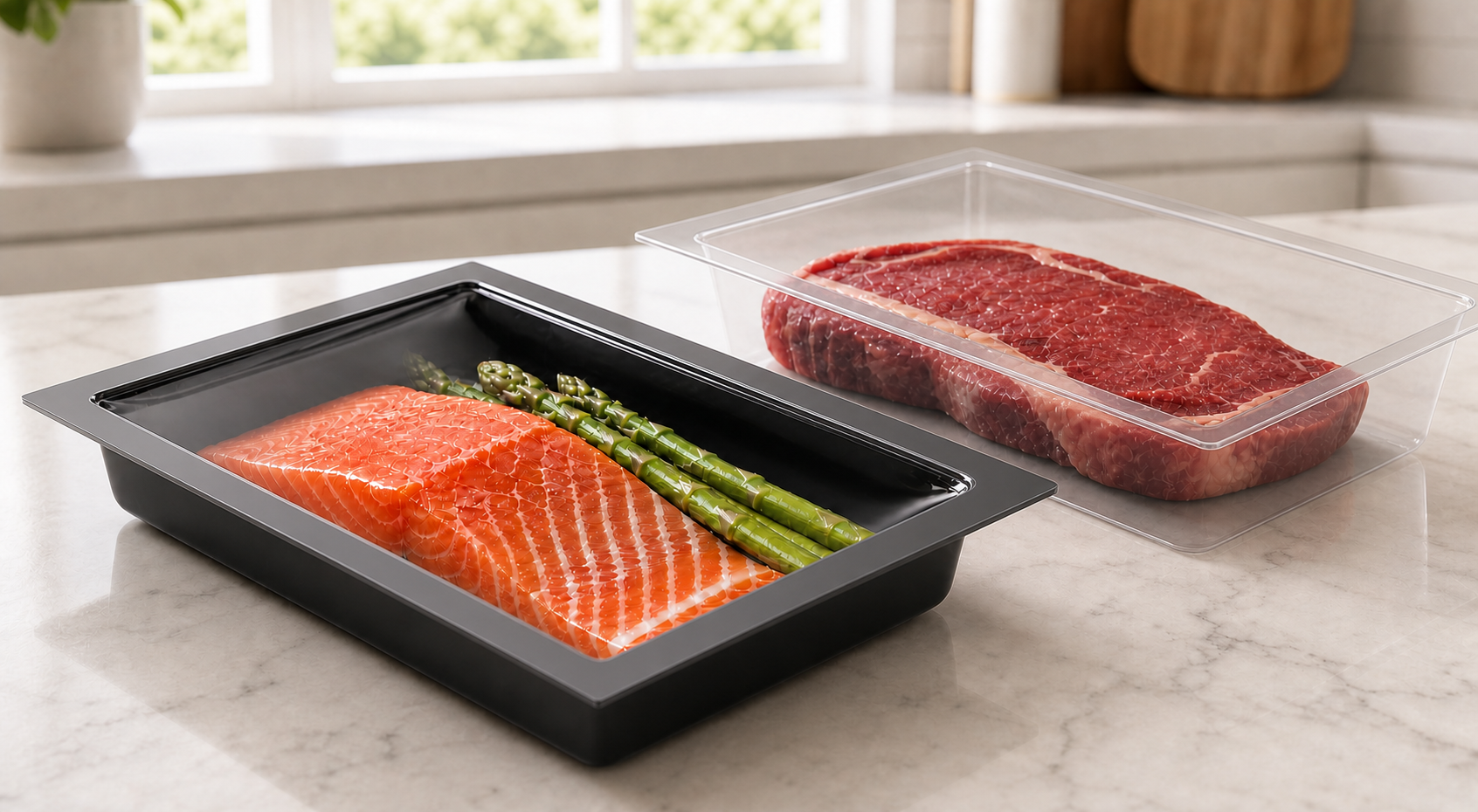
A rigid tray film starts from the pack backwards. The tray design, product weight, seal surface, barrier need, and recycled-content target all affect the final material family and gauge.
Cavity depth, flange width, corner radius, filled weight, and tooling format define stiffness and gauge.
Oxygen exposure, moisture, oil, aroma, and storage temperature decide whether barrier layers are needed.
The PE seal surface must suit the chosen top web, peel or lock-seal need, and sealing window.
RPET, PVC, EVOH, and PA options are matched to compliance needs, availability, and buyer specifications.
Structures
These are the first structure families to evaluate for rigid forming trays. Final selection depends on tray geometry, product sensitivity, storage temperature, lidding film, seal preference, and any recycled-content or PVC-based specification from the customer.
Used for clear PET-based trays that need good forming behavior and a PE seal surface for compatible lidding films.
Specified when MAP performance, oxygen sensitivity, or a longer shelf-life target requires an EVOH barrier layer in the tray film.
Suitable where existing tooling, customer specifications, or local market needs are built around PVC forming films with PE sealing.
Used when a PVC-based tray format also needs stronger oxygen-barrier performance for MAP or chilled shelf-life planning.
Considered for RPET-based packs where product shape, tray depth, handling stress, or forming behavior calls for added toughness.
Performance priorities
Once the structure is selected, the formed tray is checked on the actual pack: how it forms, how the flange seals, and how it looks after filling, storage, and handling.
Industries
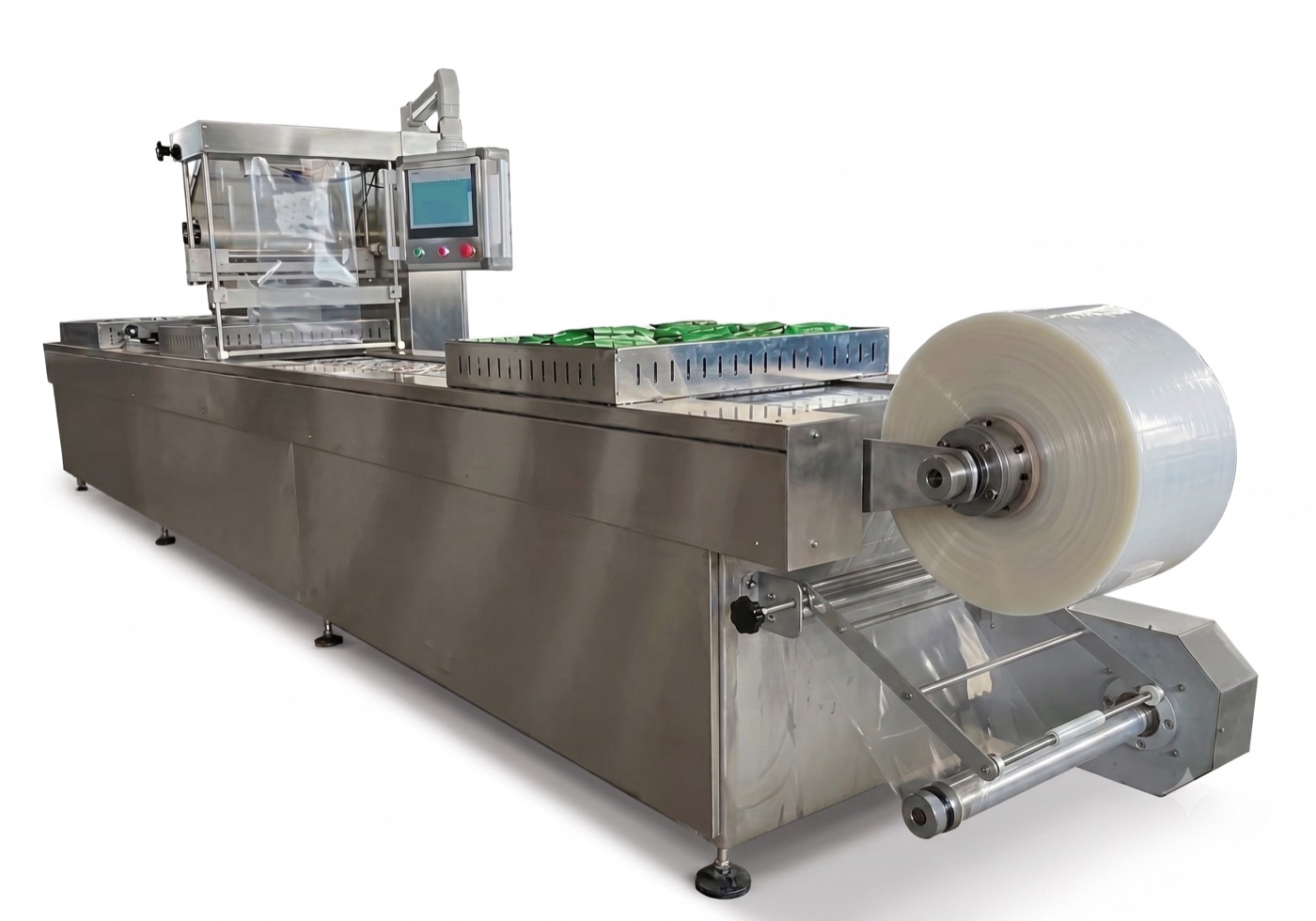
A clearer launch view for the rigid-forming page: core application groups on one side, with a process-led machine visual on the other.
Sustainability
RPET is increasingly important for buyers managing recycled-content targets, plastic-tax exposure, and sustainability claims. The final structure balances recycled content with food-contact needs, colour, clarity, forming behavior, barrier layer, sealing layer, and customer documentation.
Requirement checklist
Rigid tray projects move faster when the pack geometry, lidding film, product, and sustainability target are clear from the first conversation.
Product type, filled weight, tray dimensions, cavity depth, flange width, and tray shape.
RPET or PVC route, PE seal layer, EVOH barrier need, PA layer need, and target thickness.
Top web, lock seal or easy peel expectation, sealing temperature window, and seal-area concerns.
Chilled, frozen, ambient, or export conditions with RPET, compliance, and buyer documentation needs.
FAQ
RPET/PE, RPET/EVOH/PE, PVC/PE, PVC/EVOH/PE, and RPET/PA/PE are the first listed structure families.
EVOH fits packs where oxygen sensitivity, MAP gas retention, aroma protection, or longer shelf-life targets are part of the pack brief.
Yes. RPET content depends on final structure, food-contact compliance, clarity, forming behavior, and documentation expectations.
Share product, tray dimensions, cavity depth, target thickness, material preference, lidding film, seal preference, storage condition, shelf-life target, and monthly quantity.
Request quote
Nexus Corporation uses your tray geometry, preferred structure, RPET expectation, lidding film, sealing need, and storage conditions to recommend a rigid laminated film.